
Mobility Lab
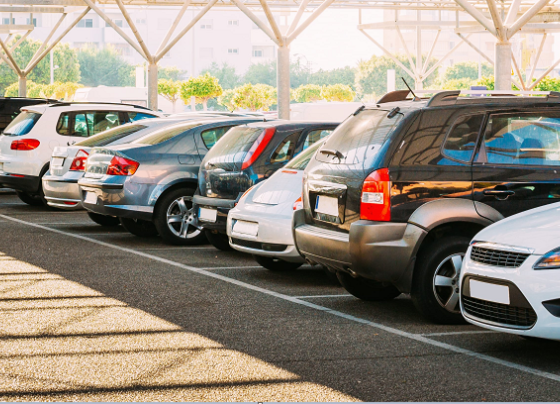
The free parking paradox: when today's convenience holds back tomorrow's mobility
When workplace parking comes free, 62% of those who have access to it use it always or nearly always. Once charged for, that same space retains merely 35% of its users¹. Yet neither the distance nor the transport offer has changed. Only the free parking is gone.
Across Greater Geneva, this perk appeals to staff as much as it burnishes the employer brand. For the organization footing the bill, however, it is anything but neutral. It carries a real cost, seldom weighed against its effect on commuting, and embodies one of a company's most far-reaching mobility decisions, often set once and rarely revisited. Every morning, an allocated space steers the choice of transport mode before the question even arises. Herein lies the paradox: the easier parking is made today, the more deeply it entrenches established habits, at times at odds with the very climate targets the company has set for itself.
A real cost, long hidden from view
A parking space is, in truth, never free. Its cost (land, construction, maintenance) simply escapes the notice of those who use it, since the employer absorbs it. In Geneva, a paid workplace space rents for CHF 119 per month on average¹, and more in the city center. Very real, this expense most often dissolves into general company overhead.
The canton of Geneva is under no illusion: it describes free parking, in its own words, as a subsidy granted to drivers². The advantage accrues to those who arrive by motor vehicle, while people who cycle, walk, or take the train generally receive no equivalent. In Geneva, one in three employed people enjoys free parking at work, and one in two across Switzerland¹.
This cost also harbors one of an organization's main mobility levers. Many companies and institutions scrutinize their vehicle fleet, their energy use, or their business travel; the effect of their parking policy on home-to-work journeys, by contrast, more often slips off the dashboard. Measuring it, however, opens up tangible, and often underestimated, room for action.
The indirect effects of free parking: a bias toward the car
If free parking carries such weight, it owes less to its cost, which users never directly perceive, than to its hold over the decision itself. The behavioral sciences provide a key to understanding. A reserved space acts as a default option: the car is already there, the route is familiar, the habit ingrained, and the path of least resistance usually prevails. Add to this the effect of the zero price itself, since whatever costs nothing is spontaneously favored, and the car then appears far less expensive than it truly is. One last spring reinforces the whole: giving up an acquired space feels like a loss, and surrendering a benefit hurts more than never having received it, a phenomenon specialists call loss aversion. A recent study on the reallocation of parking spaces confirms it, with those affected showing a marked preference for keeping things as they are³.
This mechanism has a name: the reverse nudge. A nudge is a discreet prompt guiding a choice without imposing it; here, it works the other way around, pushing by default toward the private car rather than the alternatives. Geneva's figures bear this out: where parking is free, 62% of people use it almost systematically, against barely more than a third where it comes at a price¹. Across Switzerland, 45% of working people opt for the car when they have a free space, compared with 33% otherwise². Parking does not merely reflect mobility habits: it helps shape them.
The current period nonetheless offers favorable ground for considering other options. Hybrid working has loosened the occupancy of company parking lots for part of the week, and such breaks in routine are precisely the windows in which habits are most likely to evolve⁴. For Greater Geneva's cross-border workers, whose commute often comes down to a choice between a reserved parking space and a seat on the fast-growing Léman Express, the question is anything but theoretical.
Acting without imposing
Restoring choice does not, for all that, mean removing spaces or penalizing those who drive. Several schemes, evaluated in Europe and across the Atlantic alike, seek instead to make the decision visible and fair once again.
California led the way as early as 1992 with a simple mechanism, the "cash-out": employers who fund a space offer its equivalent value, as an allowance or a mobility budget, whenever the choice falls on a soft mobility alternative. The right to park remains intact, at no loss to the individual, while the choice regains a measure of neutrality. Evaluations conducted there link the scheme to a 12% drop in car kilometers driven to work, a decline in solo driving from 76% to 63%, and public transport use up by half, at a virtually unchanged cost to employers⁵. The arrangement further treats every mode equally, paying the same contribution whichever means of transport is chosen.
Other territories act on supply. In Nottingham, England, a levy on company parking spaces has funded the tram network's extension since 2012; the city has lifted to over 40% the share of trips into its center made by public transport, without denting its attractiveness, as the number of businesses there has even grown⁶. In neighboring France, the sustainable mobility allowance enables employers to fund cycling or carpooling, at an average of 420 euros per year⁷.
Greater Geneva is moving in the same direction. The canton's 2024-2028 parking action plan explicitly invites companies to reduce, and charge for, the spaces allocated to their staff⁸, while the Geneva authorities already recommend an equivalent contribution for anyone forgoing theirs². At the scale of a neighborhood or business district, pooling existing parking facilities opens the same avenue for local authorities. The momentum is under way: close to forty Geneva organizations, accounting for over 12% of the canton's jobs, already carry the Ecomobile label⁹.
Conclusion
In a cross-border basin where roads run congested and new infrastructure often takes time, parking opens a rare lever: one an organization can pull on its own, without delay. Designed with care, a parking policy complements the multimodal offer the territory funds, from the Léman Express to cycling and pedestrian networks¹⁰ and extends its reach.
It is precisely within this logic that evomoov, the multimodal solutions ecosystem designed by tpg, and the approach it champions are rooted: treating parking as a managed, measurable, and equitable behavioral lever, activated in partnership with specialized players such as Izix.
To explore the mechanisms underlying mobility choices and grasp the transformation levers within reach, the new white paper "Behavioral sciences: a lever for transforming mobility practices" offers a hands-on tool for moving from observation to action plan.
What if your parking policy became one of your best mobility levers?
Sources
- Office cantonal de la statistique (OCSTAT). (2023). La mobilité des habitants du canton de Genève en 2021. Communications statistiques n° 71. https://statistique.ge.ch/tel/publications/2023/analyses/communications/an-cs-2023-71.pdf
- République et canton de Genève. (2025). Plans de mobilité en entreprise : les bonnes pratiques. https://www.ge.ch/dossier/mobilites-entreprises/plans-mobilites/bonnes-pratiques
- Becker, S., et al. (2025). From parking place to public space: public acceptability of parking space reallocation in Germany. Climate Policy. https://www.tandfonline.com/doi/full/10.1080/14693062.2025.2539140
- EIT Urban Mobility. (2025). Integrating behavioural insights into sustainable mobility planning. https://www.eiturbanmobility.eu/wp-content/uploads/2025/11/Final_EITUM_Behaviour_and_Mobility-1.pdf
- California Air Resources Board (CARB). (2025). Employer-Based Trip Reduction — 2025 Policy Brief (UC Davis). https://ww2.arb.ca.gov/sites/default/files/2025-04/Employer-Based%20Trip%20Reduction%20-%202025%20Policy%20Brief.pdf
- Transport Action Network. Nottingham Workplace Parking Levy. https://transportactionnetwork.org.uk/nottingham-workplace-parking-levy/
- Ministère de la Transition écologique / ADEME. (2024). Forfait mobilités durables — Baromètre 2024. https://www.ecologie.gouv.fr/politiques-publiques/faq-forfait-mobilites-durables-fmd
- République et canton de Genève. (2024-2025). Plan d'actions du stationnement 2024-2028 (PAST). https://www.ge.ch/dossier/plan-mobilite-geneve/plans-actions-mobilites-2024-2028/plan-actions-du-stationnement-past
- République et canton de Genève. (2025). Label Ecomobile. https://www.ge.ch/dossier/plan-mobilite-geneve/mobilite-entreprises/label-ecomobile